
Home / In-depth info / The role of anti-condensation solutions in automotive lighting systems thermal management

The role of anti-condensation solutions in automotive lighting systems thermal management

Controlling moisture in car headlights through high-performance anti-condensation solutions for the automotive sector

The automotive industry is now at the heart of an unprecedented technological transformation, driven by electrification, integration of ADAS systems and the evolution of lighting toward ever higher-performing solutions such as LED and matrix headlights. In this context, even seemingly secondary components like lighting systems take on a strategic role for safety and overall vehicle efficiency. Alongside innovation, new challenges are also emerging related to the thermal and environmental management of headlights, including the well-known issue of condensation inside car headlights.

Moisture forming inside headlights is a common phenomenon that can occur in everyday use under various conditions, including temperature swings between the inside and outside of the headlamp and high ambient humidity caused by rain or frequent car washes. This phenomenon, known as automotive headlight condensation, can compromise light output and reduce visibility, with long-term consequences for the durability of internal components. For this reason, managing condensation in automotive headlights is a key topic in the development of advanced lighting systems.

In today’s landscape, solutions to prevent moisture in automotive headlights range from ventilation systems to equalise pressure to the latest technologies based on temperature control. While ventilation is a well-established approach, it is often insufficient in critical environmental conditions or in specific headlamp architectures typical of the latest modern vehicles. This is where, thanks to Printed Electronics technology, automotive headlight thermal-management solutions come to address condensation at its root by controlling internal temperature.

Among the most effective technologies for controlling condensation in car headlights, integrated heating systems provide a practical answer. Anti-condensation heaters make it possible to keep the inner surface of the headlamp above the dew point, preventing moisture build-up and ensuring optimal operating conditions in any climate.

Contact us to learn more about how anti-condensation solutions can improve the performance of your automotive lighting systems.

Polyester anti-condensation heater technology

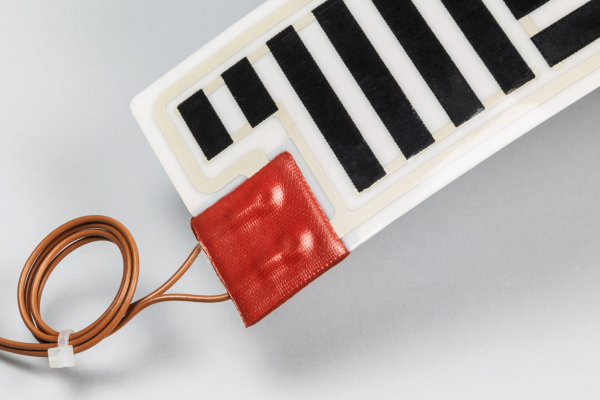
Alper’s solutions stand out in the field of anti-condensation systems for automotive LED headlights thanks to their high level of integration and design flexibility. Polyester heaters are an advanced technology based on screen-printed resistive elements on a flexible polyester film substrate, engineered to be integrated directly into the headlight assembly. Alper heaters provide uniform heat distribution, without hot spots, ensuring precise thermal management.

From an engineering standpoint, these devices are designed to operate in demanding environments, including automotive applications, where vibration, thermal cycling require highly reliable performance. The heaters’ thin, flexible construction enables optimal integration even in very compact headlamp designs, without affecting geometry or optical performance. In addition, using materials such as polyester provides high resistance to moisture and long-term durability critical factors for applications where reliability is a non-negotiable requirement.

Application benefits for managing condensation in automotive headlights

Using flexible heating elements makes possible to stabilise headlamp’s internal conditions, drastically reducing the risk of fogging. By acting on thermal balance, these devices prevent water vapour from turning into liquid deposits on optical surfaces, ensuring consistent visibility and performance even in the presence of wide climatic variations.

A further advantage is the ability to customise the resistive pattern, allowing the heater to be tailored to the specific requirements of the headlamp and vehicle. Fast thermal response enables intervention in a short time even under particularly harsh weather conditions, consistently ensuring optimal performance of the lighting system. In a context where automotive headlight thermal management is increasingly important, these solutions are a key enabler for improved safety, reliability, and perceived vehicle quality.