

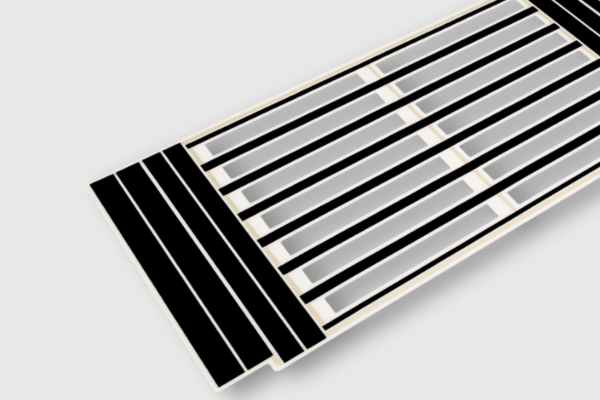
Alper custom antifrost solutions for Digital Signage
Alper’s polyester heating film is an advanced technology to provide frost and condensation protection for digital displays, outdoor advertising panels and informational totems. Produced using a screen-printing process on a PET (polyester) thin foil, these heating elements are ultra-flat and ultra-light to guarantees the perfect invisibly integration into the display structure without altering its design or dimensions. The manufacturing process begins with the deposition of fine silver conductive tracks. A second layer of carbon-based resistive ink is then printed over the silver tracks. The heating film ensures uniform heat distribution across the entire surface. The display reaches an optimal operating temperature that prevents condensation or frost from forming.

The heating element is engineered for continuous operation up to approximately 90°C, with short-term peak tolerance up to 100°C, always in compliance with safety standards. Keeping the display’s internal temperature steady helps it last longer, stay more reliable and avoid problems caused by moisture or sudden temperature drops. In places like shops, stations or any space where screens need to always stay clear and visible, an Alper heating element helps the display work smoothly even through the coldest months.
Why Polyester Heating Films are ideal for Digital Signage
Some ideal applications of Alper’s polyester heating elements may include informational totems in railway stations and airports, advertising displays in public squares, interactive totems at bus stops, way-finding kiosks in urban centres and industrial outdoor installations. In all of these scenarios, the display can be designed with active protection against condensation and frost. Constant and evenly distributed heat prevents fogging, preserves legibility, avoids moisture infiltration and shields the electronic components from thermal stress and internal corrosion. The result is a highly reliable display engineered to withstand the harshest climate conditions.
Alper’s polyester heaters are a high-performance, flexible, discreet technical solution that can be adapted to any need.
