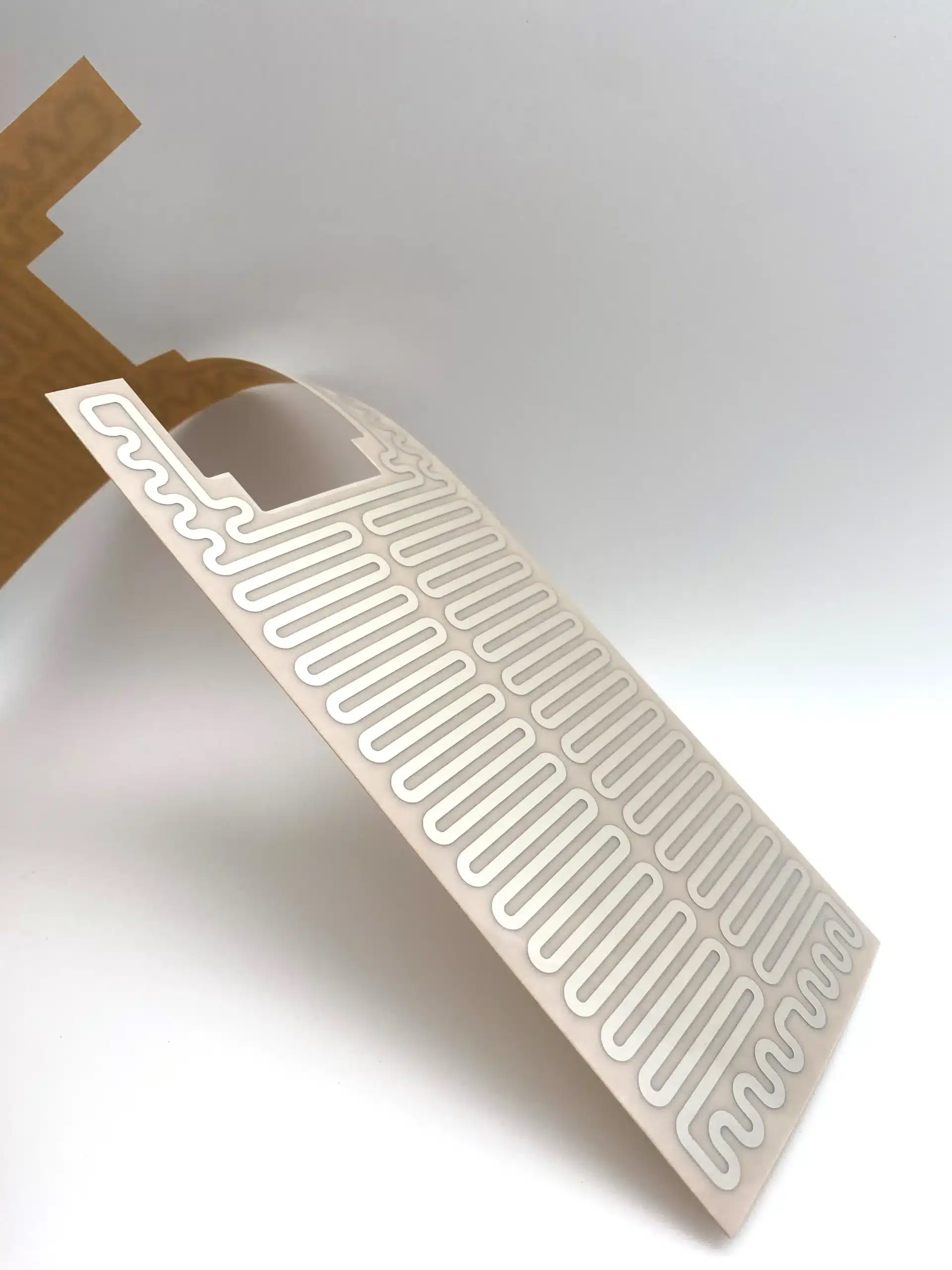
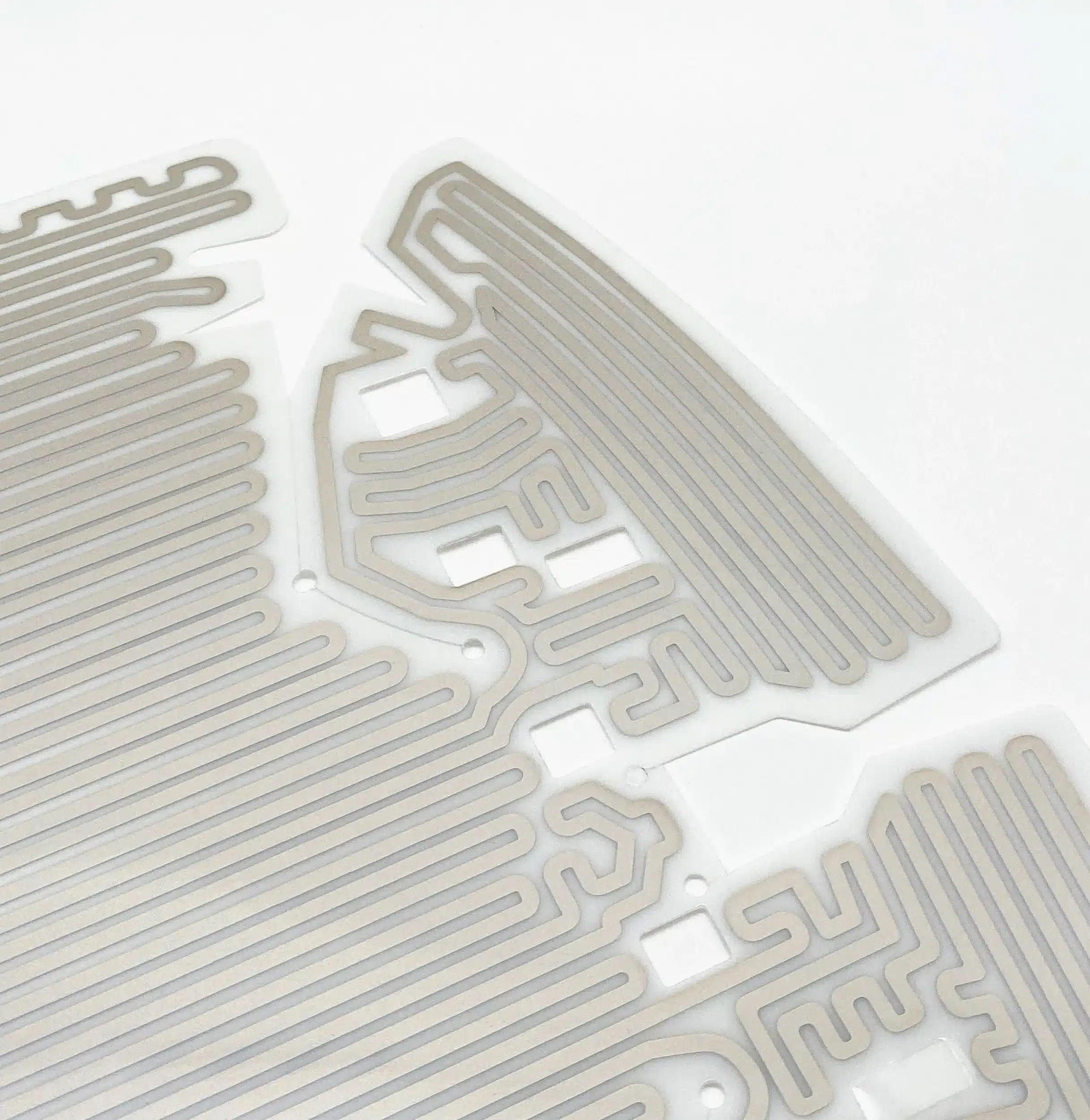
Alper uses Printed Electronics to produce electrical printed circuits by screen printing: a PET sheet is printed with conductive silver paste.
Alper’s Flexible Printed Circuits allow to adapt to any surface without risking interrupting signal transmission. Polyester foil is the perfect flexible substrate, it can be flexed without the danger of damaging the silver circuit printed on top.
The advantage of using Printed Electronics is the possibility of making flexible printed circuits suitable for the integration of IoT (Internet of Things) technology. Alper polyester printed circuitry become the best tool for a smart connection towards the exchange of information and data processing between devices.
The Printed Electronics used by Alper produces flexible printed circuits using screen printing.
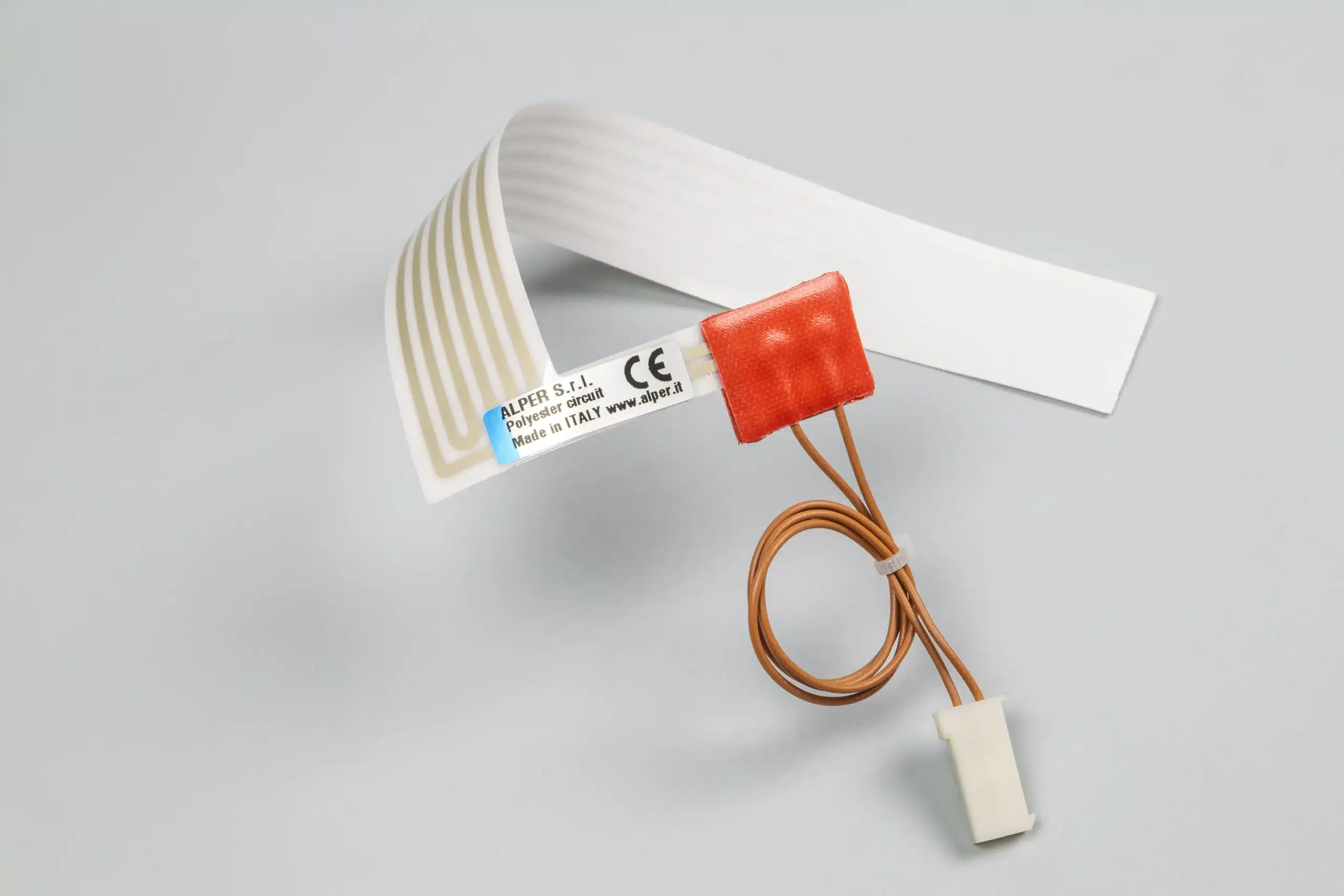
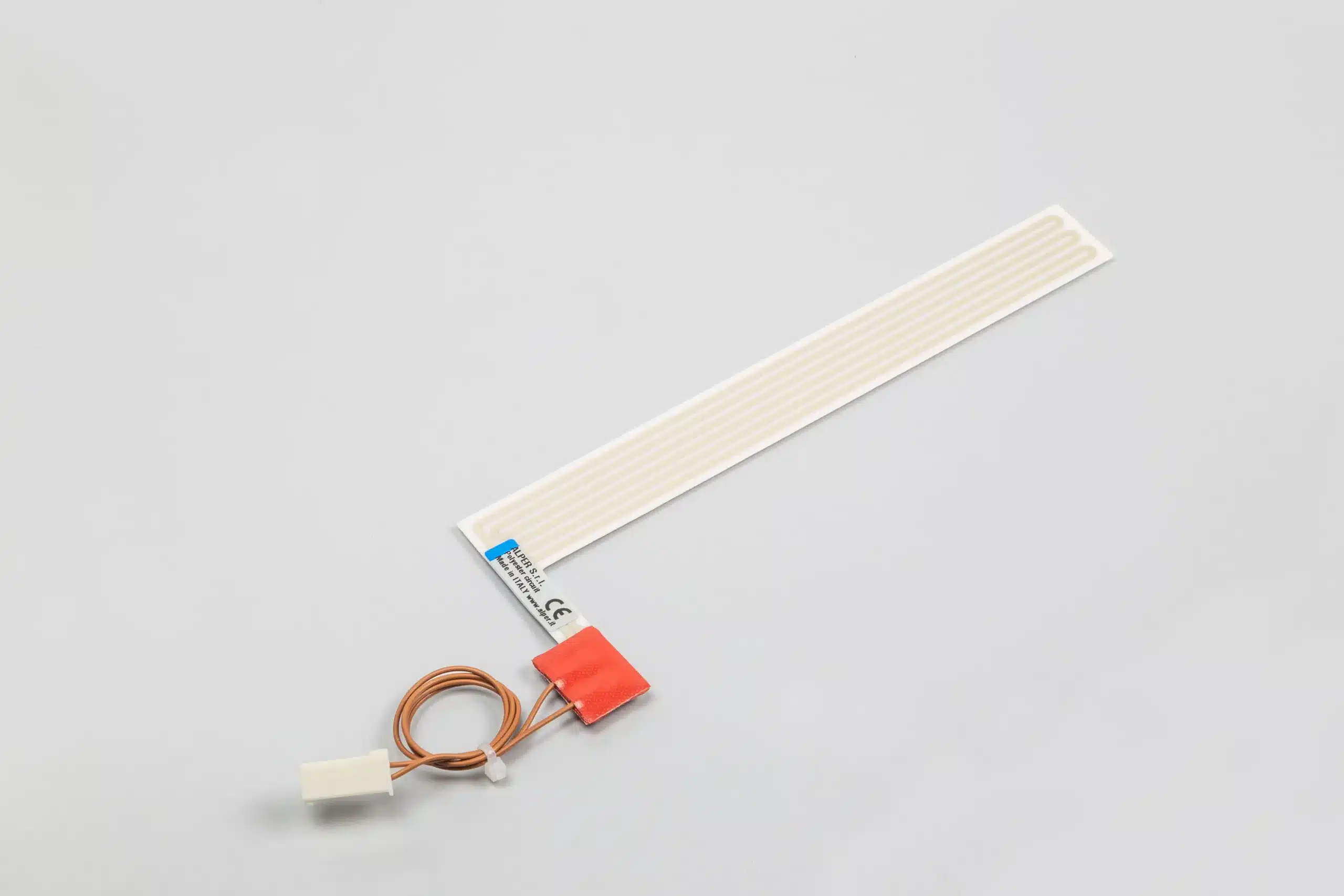
Tracks produced with a mixture based on silver and other components are deposited. Subsequently, flexible circuits are protected by insulating layers capable of ensuring high dielectric strengths, over 3750 V. Each flexible PTF (Polymer Thick Film) can be made adhesive on one or both sides and equipped with any type of cable and connector.
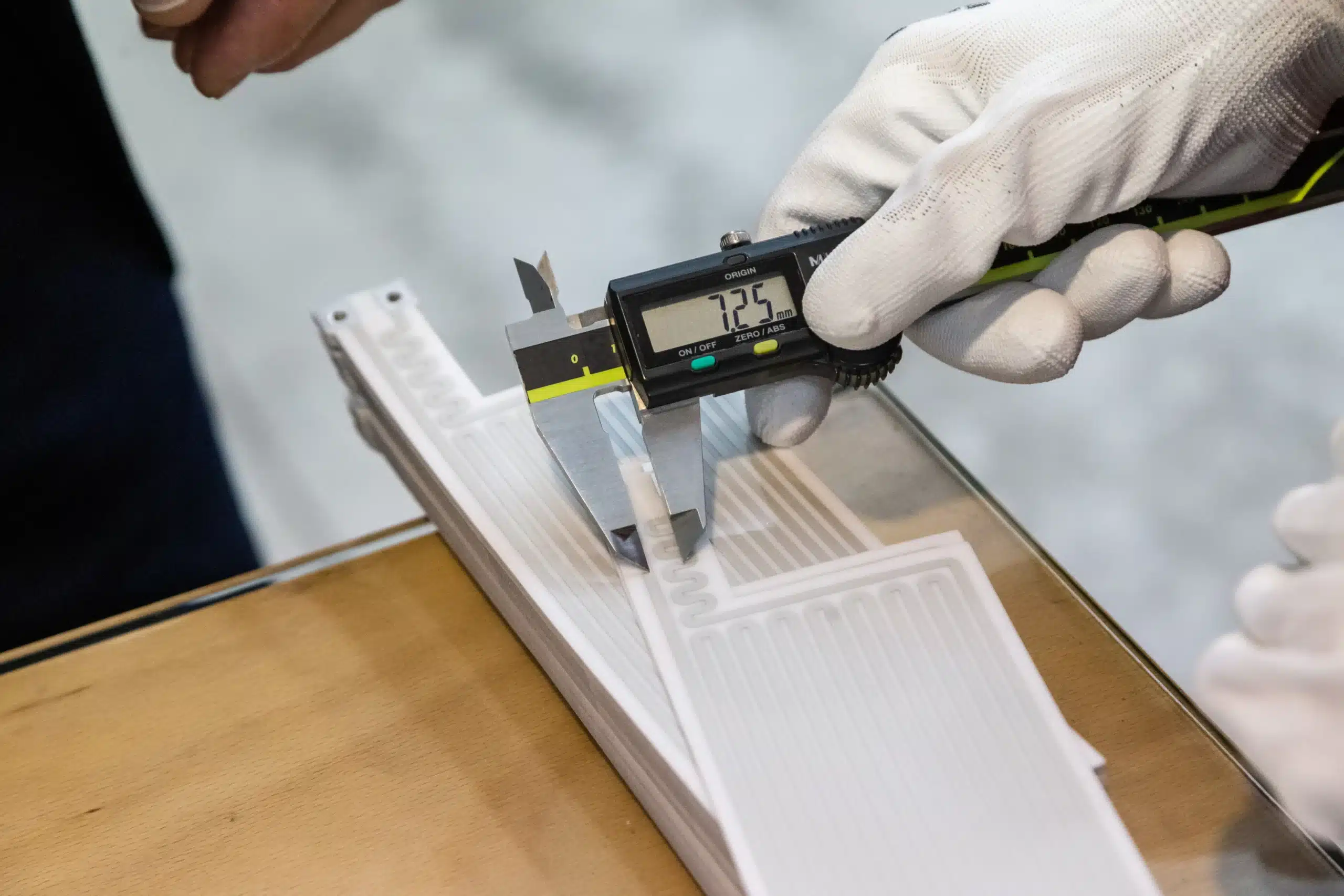
FPCs are remarkably thin (min. thickness 0.2 mm), they can flex and bend without the risk of breaking or damaging the circuit. Flexible printed circuits produced by Alper through PrintedElectronics are adapted to accommodate multiple technologies to be implemented in numerous applications.
Due to these characteristics, they are used in small spaces where a signal, even current, is needed.
Technical specs
Maximum dimensions: 1000x600mm (customized measures available on request)
Application of adhesive surfaces using a wide range of specific double-sided adhesives for each use
Wiring on customer specification
Customer specific design
Substrate temperature limits:
Min. -40 °C
Max. 90 °C (continuously)
Max. 100 ° C (for short periods)
Note: The component is provided as an unfinished part. Conformity and marking of the final product shall remain the responsibility of the manufacturer of the complete unit.
Ask for info
Please fill in the form below to send us a request. We will get back to you as soon as possible!